
You opened the account. For two weeks you posted properly, and then the newest picture on the grid quietly became three months old. That is the usual ending. It is rarely a discipline problem, because posting is production work: every few days somebody has to make a photo that does not exist yet and write a sentence nobody has written yet. In a small operation that somebody is already on the line at seven. So before choosing a platform or a frequency, it is worth knowing how much of next month's posting your menu can already cover on its own.
Your Menu Is the Content Library You Already Keep
Open the item editor on your own menu and look at what a single dish already carries. A name. A description somebody sat down and wrote. One or more photos, price variants, allergen and nutrition labels. On the guest side that item gets a page of its own, and guests can leave a rating and a comment on it there.
Not every line will have all of that. The ones that do are close to a finished post already: a picture, a caption you are editing rather than inventing, and now and then a sentence from a guest you would not have thought to write yourself.
A weekly rhythm can run off that file for a while before anyone has to invent anything. It also carries something invented content does not. The dish in the picture is on the menu tonight.
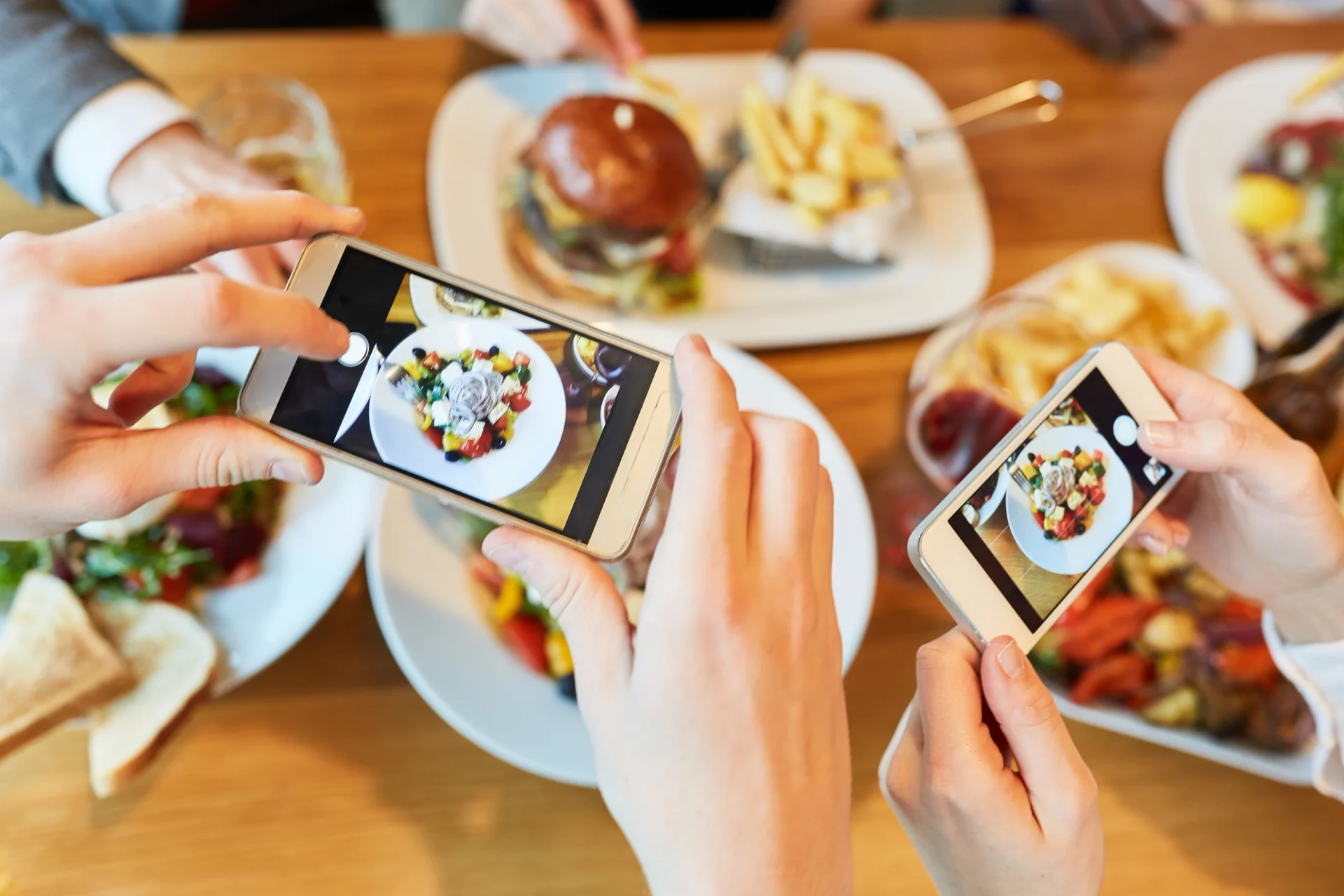
Photography is where this stalls, for reasons that are entirely practical. A good food photo wants light, time and a plate nobody is waiting on, and service gives you none of the three. Adjusting a photo you already have for light, crop or presentation is a much smaller job than a reshoot. One frame handled that way can usually cover more than a single post. The line to hold is that the edit should not change what the plate or the portion actually is.
Then there is the dish that photographs badly and sells anyway. Braises, stews, most soups. If the only test for what gets posted is how it looks, the feed slowly drifts away from what your kitchen is known for, which is a strange result for a marketing effort.
Turning One Item Photo Into a Short Video
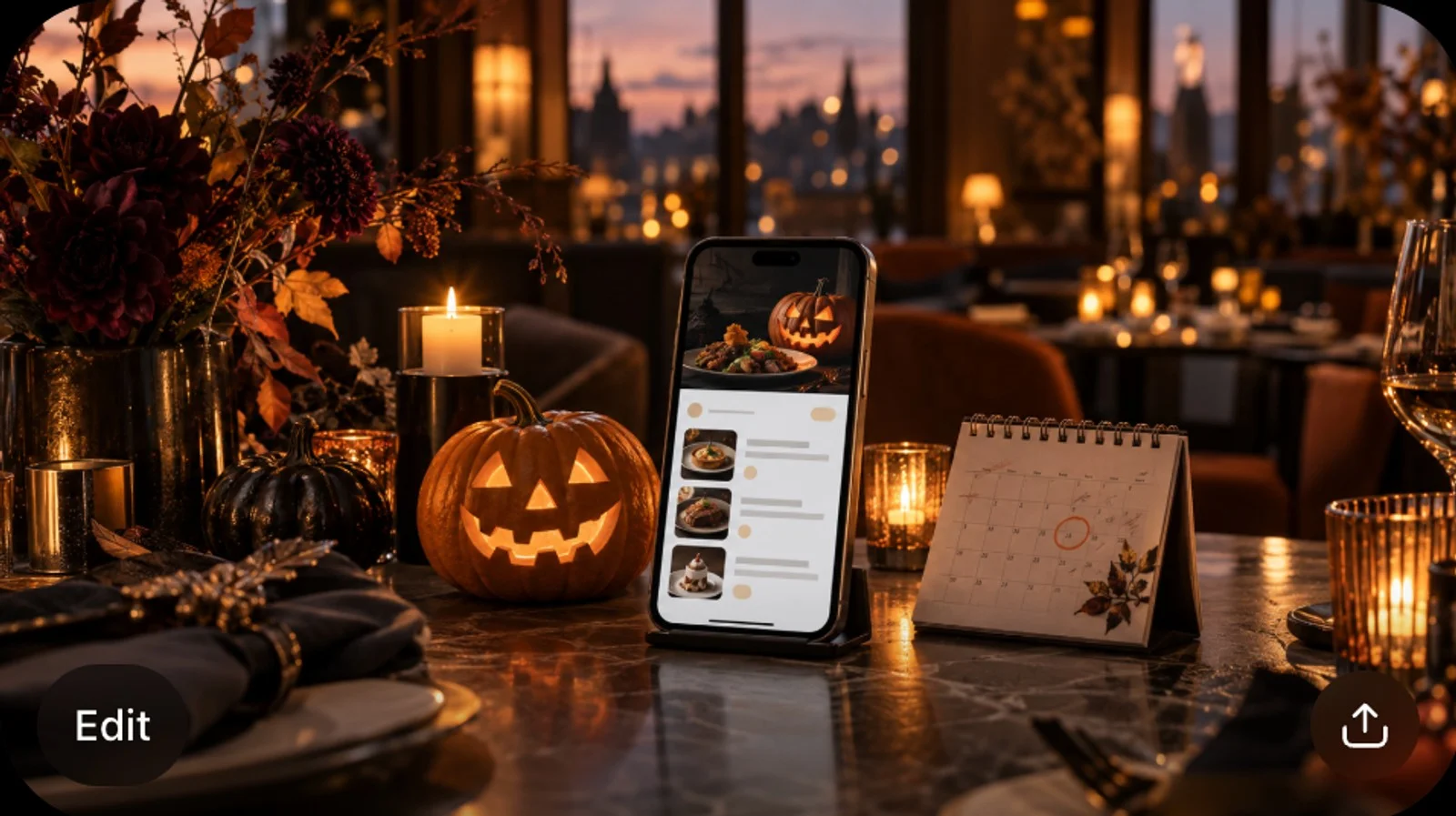
When we went through the panel on 2026-08-12, the Video tab in AI Media Studio asked for three things and nothing else: a source image, a style, and an aspect ratio. No prompt box. No timeline. The source image comes from your menu items or from an upload, so the item file is the raw material here too.
Two of those three are fixed the moment you press generate, and both are social media decisions rather than kitchen ones.
The first is the aspect ratio. Six of them sit in front of you before the clip exists, 9:16 for stories and 4:5 for a feed post among them. We saw no crop step after the video came back. So where the clip is going has to be settled before there is a clip.
The second one applies to three of the seven styles. Macro Texture Sweep, Cinematic Scene Orbit and Ingredient Reveal print text into the video itself, either the item name or labels on the ingredients as they come apart. On a single-language menu that is free typography. On a menu that runs in more than one language it pins the clip to one of them. Whether that on-screen language follows the menu's active language is something we have not confirmed. Until it is, the safer reading is to treat those three as single-language assets, or to pick one of the four styles that prints nothing.
Credit cost and waiting time are nowhere near uniform across the seven. The cost runs from 60 to 600, and the badges estimate roughly three minutes at one end and thirteen at the other. Enhancing a still you already have sits at the cheap end of the same library, around seven credits per enhancement. Either way this is work for the gap between lunch and dinner, not for a spare minute in the middle of service.
What the 30/30/30 Rule Actually Refers To
The phrase comes up in restaurant searches often enough to answer plainly. Two unrelated rules share the name.
One of them is a cost split: roughly a third of revenue to food, a third to labor, a third to overheads, and whatever survives is profit. That one is a budgeting rule of thumb. It says nothing at all about what you post.
The other is a content mix, the one general marketing advice calls the rule of thirds. A third of posts promoting your own business, a third sharing other people's material, a third spent in conversation. Renamed 30/30/30, it gets handed to restaurants as though it were a posting schedule.
Neither number arrives with a measurement we can point at. We would not run a calendar on either. The trouble with a fixed ratio, as far as we can see it, is that it assumes a bad week behaves like an average one, and the third that needs the most production is the third most likely to go first.
The mix that tends to hold is the one your supply can hold. Count what the menu can feed, then decide what the remainder has to be. If two posts in three come out of the item file, the ratio has already been settled by the only constraint that still applies in a full month.
Which Platform, and How Many
One platform, chosen by what you can supply, plus your listing on maps. That is the answer we would give, mostly because it is the one still standing at the end of a busy month.
If what you own is item photos, a photo-first feed takes that material with no extra production. If somebody on the team is comfortable on camera and will still be comfortable in November, a video-first platform can carry more. Our TikTok guide for restaurants goes through what that costs week to week. The maps listing is not social media, but it does the same job at the end of the decision. It is where people check hours and photos in the minute before they choose, and it goes out of date without anyone touching it.
Lists of the seven major platforms are written for every industry at once. A restaurant drawing its guests from a couple of neighborhoods does not need a presence on all seven. It needs one account that actually gets fed. A second account tends to cost about what the first one did unless every post is reused across both. Reuse is usually the first thing to give, especially when the aspect ratio was chosen for one of them.
Where the Profile Link Should Go
Every profile sends people somewhere, and where they land decides whether the posting turned into anything at all. A bio link that opens the menu itself is the shortest path. The person who came for the photo sees the price, the allergens and the rest of the list without making a second decision. There is also nothing to build, because the menu page a guest opens from a QR code is already published.
A separate landing page earns its click when there is a goal the menu alone does not serve: taking a reservation, running a campaign, collecting an email address. Otherwise it adds a step between the craving and the answer.
A First Month You Can Finish
Four weeks is enough to find out whether the account will hold, as long as the month runs roughly in this order.
1. Count the supply first. Open the menu and count the items that already carry both a usable photo and a written description. That number is what the month can hold, not your ambition.
2. Fill the item file, not the calendar. Work through the dishes that sell well and have no photo yet. Every gap you close there is a post nobody has to invent in November.
3. Decide where the profile link points, and decide it once.
4. Set the rhythm for your worst week, not your average one. If one post a week survives a full Saturday and a supplier who did not turn up, one post a week is the right number.
5. At the end of the month, count two things: how many posts came out of the menu, and how many people opened the menu from the profile link.
Follower Count Is Not the Number to Watch
Followers arrive for all kinds of reasons, and most of them have little to do with next Friday. An account can pick up a few hundred from one clip that traveled and still put nobody in the room. That is not a failure of the clip. It is what the number can and cannot tell you.
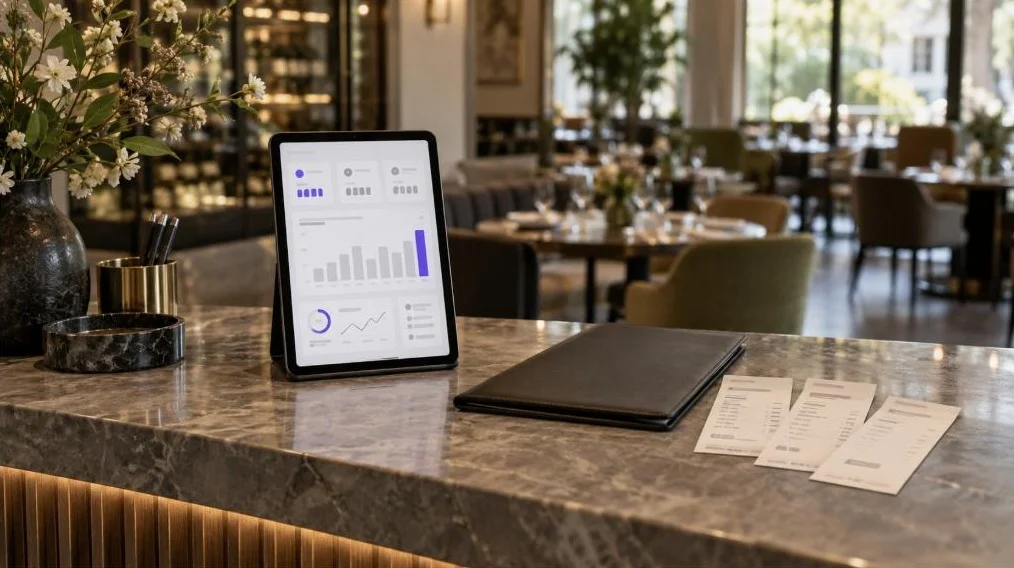
The menu-side figures answer something narrower. The AI Reports tab keeps sessions, menu views and item views, and it reads one window against the one before it, so a 7 day period sits next to the previous 7. If you post once a week, the shape of that comparison is at least worth a look.
It is not proof of anything. A rise on the day you posted is suggestive and no more, because a report window shows what happened and not what caused it. Counting posts and counting menu opens does not prove a sale either. What those counts can tell you is whether the work is reaching anybody close enough to walk in, which is a smaller question and a much easier one to answer.
What a Menu Platform Will Not Do
A menu platform does not run your accounts. It will not schedule posts, answer comments, or decide what your place sounds like. There is a marketing module in the panel, and at our last look on 2026-08-12 it still carried a Soon label, so it is not something to plan a quarter around.
What the software can keep ready is narrower than automation and more useful: an item file holding photos, descriptions and allergens, an image tool that makes an existing photo usable and turns a still into a short clip, and a published menu address for the link in your profile. The tone, the replies and the decision about what this place is known for stay with you. They sit inside the wider marketing work a restaurant does anyway. If you want to know how much posting your current menu could already cover, counting it takes an evening.
| What you want next | Where the link goes | What it asks of you |
|---|---|---|
| They see tonight's dish and the price | The menu | Nothing extra; it is already published |
| They book a table | Your reservation page | A booking flow that works on a phone |
| They order delivery or pickup | Your ordering page | Delivery settings and hours kept current |
| They join a mailing list | A form | Something worth receiving, or the list stays empty |
| They find you on maps | Your business listing | Hours and photos kept up to date |
Frequently Asked Questions
- What are the seven major social media platforms?
- The lists usually name Facebook, Instagram, TikTok, YouTube, X, LinkedIn and Pinterest. For a restaurant the useful order is not the order in a general list. What matters is which platform your existing material fits, and which one the people near you already use. LinkedIn earns an account mostly when you are hiring.
- Do I need a professional photographer?
- Not to start. Natural light by a window, the plate as it leaves the pass, and a phone can carry a weekly rhythm. A photographer pays off for the handful of images you will reuse for a year: the signature dishes and the room itself.
- Does the owner have to be the face of the account?
- No. If nobody on the team wants to be on camera, do not force it. A dish, the description you already wrote and an occasional shot of prep can keep the rhythm going without anyone appearing.
- Should I pay for followers or engagement?
- No. Bought numbers make the account hard to read afterwards, because you can no longer tell which posts did anything. If you are going to spend, spend on reaching people who live or work nearby. That is a targeting decision rather than a follower one.
- Is it worth replying to every comment?
- Give priority to direct questions, complaints, reservation or order problems, and comments carrying wrong information about your hours or your menu. Replying to everything is a time cost that grows as the account grows.
- Do hashtags matter for a restaurant?
- The ones tied to your neighborhood and to your own name are the ones that can reach somebody close enough to walk in. We have not measured reach by hashtag ourselves, so treat the long generic lists as unproven and keep the set short.